Accessible around the clock
One third of registered public AEDs were accessible around the clock, according to the Swedish AED Registry's 2025 annual report.
Source: Swedish AED Registry, 2025 →
Compare nine AEDs by child mode, IP rating, CPR support and connectivity. Explore each model's features and get help choosing an AED for your workplace, association or property.
Immediate CPR and early defibrillation can be crucial. An AED needs to be nearby and accessible when it is needed.
One third of registered public AEDs were accessible around the clock, according to the Swedish AED Registry's 2025 annual report.
Source: Swedish AED Registry, 2025 →CPR started immediately by a bystander increases the chance of survival compared with no CPR before the ambulance arrives.
Source: Swedish Resuscitation Council →Reported in witnessed cardiac arrests with a shockable rhythm when a shock is delivered within three minutes. This figure applies to that group, not all cardiac arrests.
Source: Swedish Resuscitation Council →These figures refer to different measures and patient groups and should not be read as a single survival comparison. Sources checked on 13 November 2026. Statistics relate to Sweden.
An AED behind a locked door cannot be collected after closing time. Where conditions are suitable, we want to help more organisations place their AED outdoors in an appropriate cabinet.
This can make it accessible to more people – staff, visitors and the local community – during evenings, nights and weekends.
A high IP rating does not replace correct temperature conditions, a suitable cabinet or regular checks. A locked cabinet or courtyard can also restrict access.
Explore our upcoming outdoor cabinet →9 models match your choices
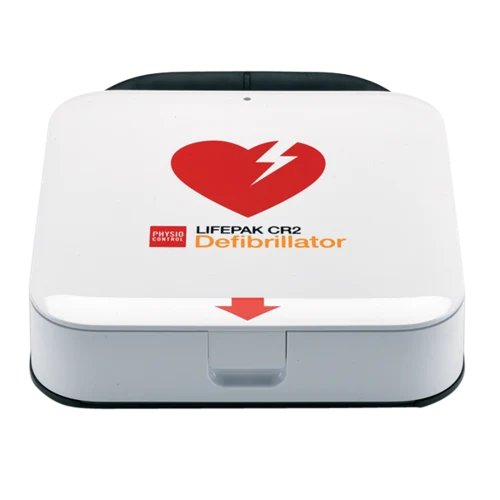
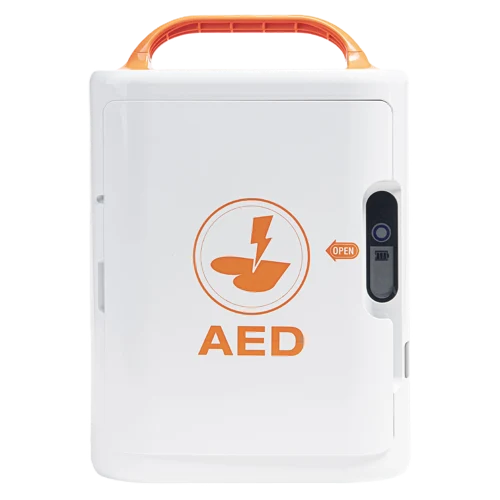
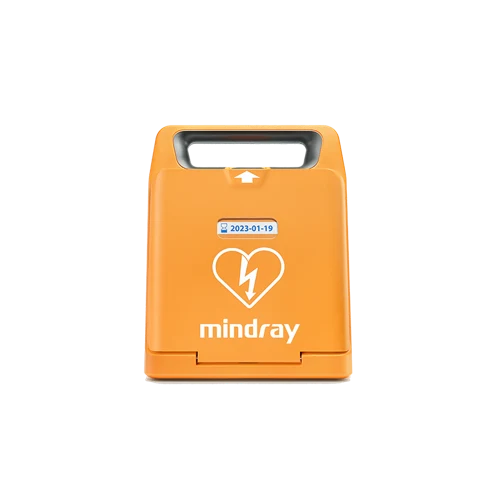
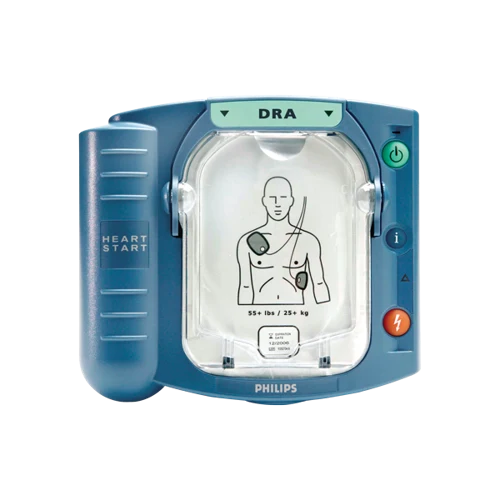
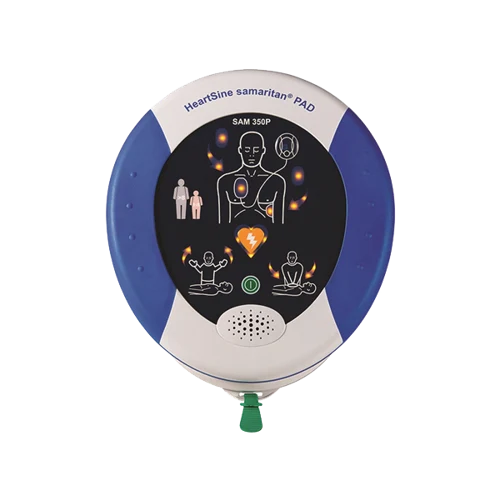
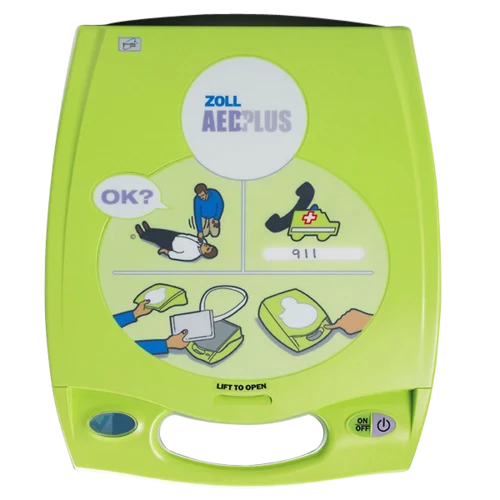
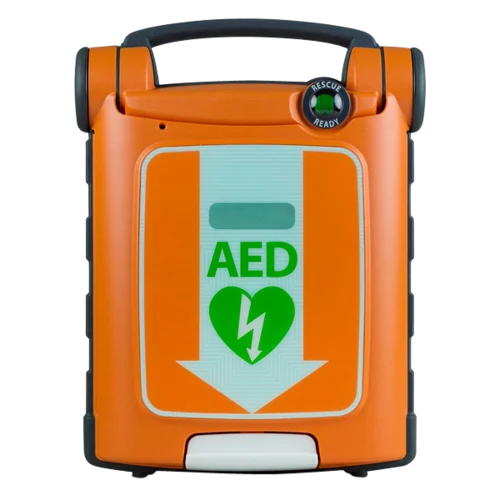
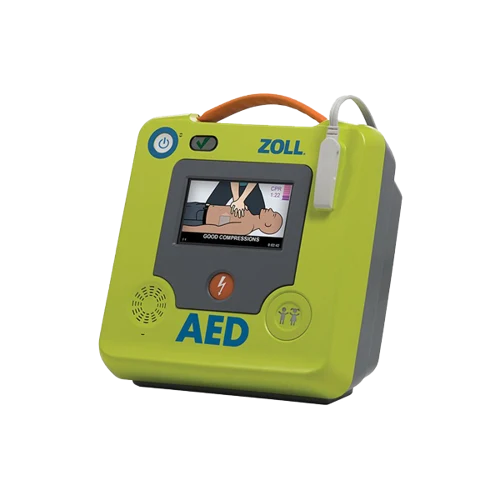
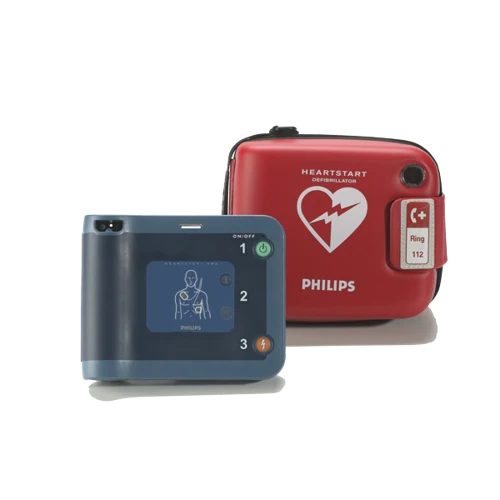
Voice guidance tells the user what to do. Feedback also measures compressions and provides a response during CPR. Functions depend on the model and pads. Always check that the quoted equipment includes the support you want.
Some models switch to child mode with a button; others need a child key or separate paediatric pads. Wi-Fi and network modules can help with status monitoring. Tell us about your organisation and we will help compare the options.
Consider dust, moisture, temperature and when the location is accessible. We encourage placement that makes the AED accessible around the clock where possible. IP21 protects against solid objects and vertically falling water drops. IP55 provides dust protection and protection against water jets; IP56 protects against more powerful water jets. None of these ratings means the device can be submerged or stored unprotected in cold conditions.
All models in this comparison can be used on children with the correct setting or accessories. The difference is how you switch: a button, child key or separate paediatric pads. Consider how easily the accessories can be found.
Voice guidance explains what to do. CPR feedback also provides a response to chest compressions. Check languages, clarity and which pads or sensors are needed.
Semi-automatic models require a button press to deliver an advised shock. Fully automatic models deliver the shock after a warning. Choose and train for the configuration you actually purchase.
Appoint someone to check the readiness indicator and expiry dates. Connectivity can make monitoring easier, especially across multiple devices. Self-tests do not replace every check.
Compare the device, cabinet, batteries, pads, paediatric accessories, training and any subscriptions. Ask for a combined quotation over the same period, for example eight years.
Arrange CPR training, find the right equipment or talk to us about HemaShock. Tell us briefly what you need and we will take the next step together.